
Organisation Structure
A Brief Note on the Administrative System and Officials of a Grama Panchayat
Grama Panchayats are the basic units of Kerala's decentralized system of governance. For the smooth functioning of a Panchayat, the elected governing body and officials from various departments work together in coordination.
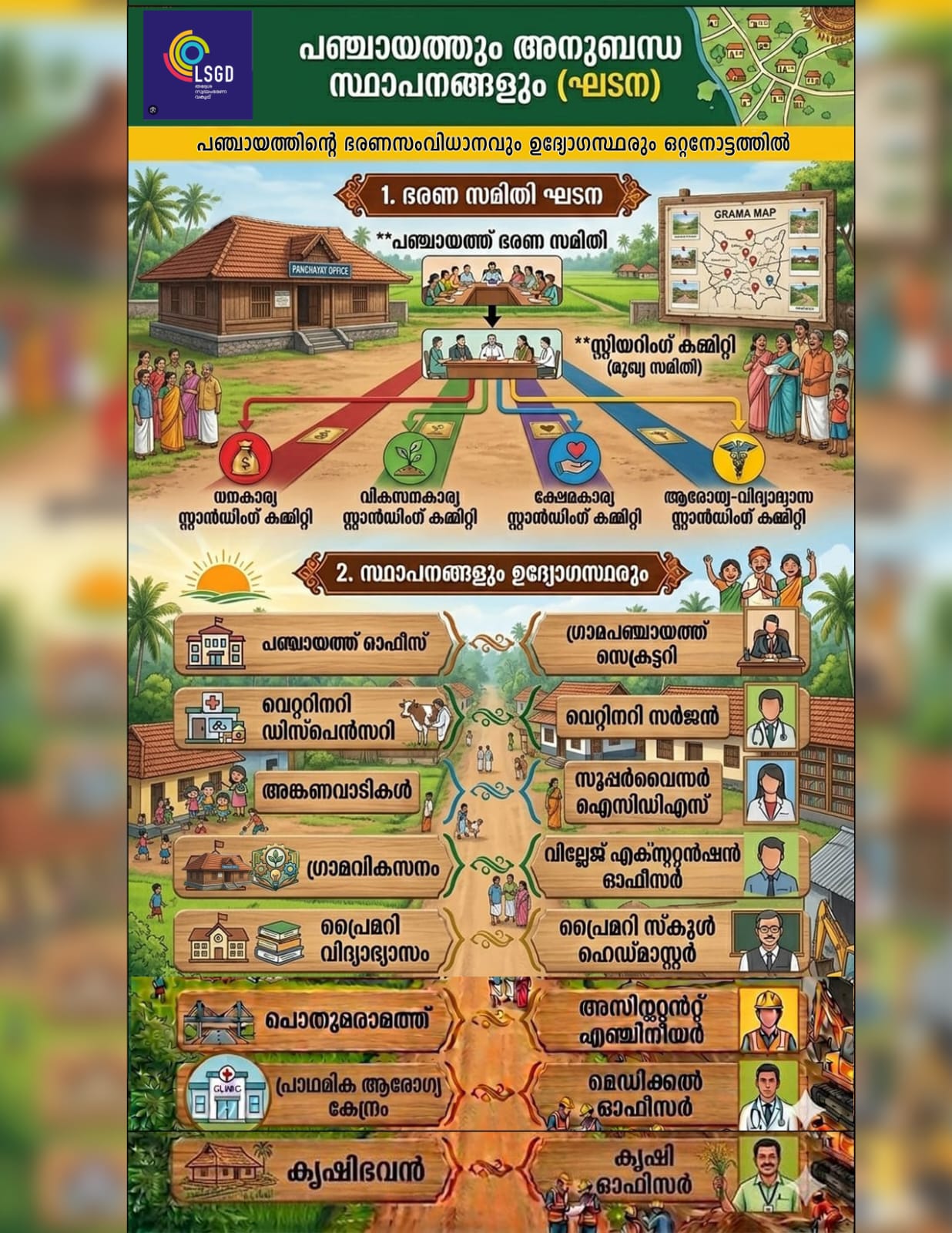
1. Structure of the Governing Body (Administrative Structure)
The elected representatives are responsible for policy formulation and decision-making in the Panchayat. The structure is as follows:
- Panchayat Governing Body: The principal governing body comprising the elected Ward Members and the President.
- Steering Committee (Main Committee): The key committee responsible for coordinating the activities of the governing body.
- Standing Committees: There are four major standing committees responsible for different areas of development:
- Finance Standing Committee: Deals with financial matters.
- Development Standing Committee: Leads infrastructure and development activities.
- Welfare Standing Committee: Implements social welfare programmes.
- Health & Education Standing Committee: Focuses on health, sanitation, and education.
2. Major Institutions and Officials
The following institutions function under or in coordination with the Panchayat to deliver various services to the public, along with the officials responsible for them:
| Institution | Officer in Charge |
|---|---|
| Panchayat Office | Grama Panchayat Secretary |
| Veterinary Dispensary | Veterinary Surgeon |
| Anganwadis | Supervisor (ICDS) |
| Rural Development | Village Extension Officer (VEO) |
| Primary Education | Primary School Headmaster/Headmistress |
| Public Works (PWD) | Assistant Engineer |
| Primary Health Centre | Medical Officer |
| Krishi Bhavan (Agriculture Office) | Agricultural Officer |
Conclusion
The various activities implemented through these administrative structures are directly connected to the day-to-day lives of the people. Officials from different departments work in coordination to ensure the effective implementation of decisions taken by the governing body. Such coordination between the elected representatives and officials is essential for ensuring the overall development and progress of rural communities.